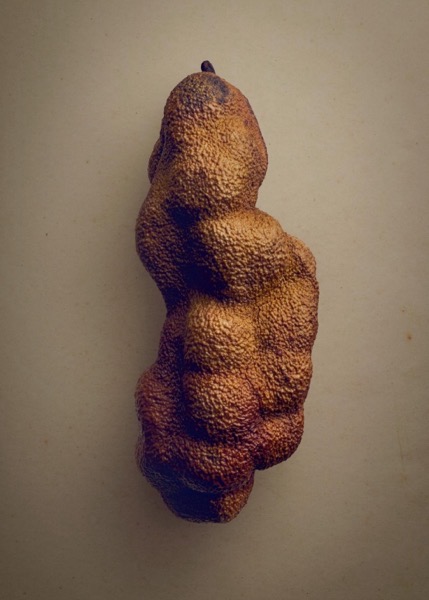
Walking Objects
For this project, you will start by taking a walk through the natural landscape. It should be someplace like the woods, around a lake, through an open field, or any other place you have access to. You should move slowly and attentively. As you walk, notice what draws your attention. This might be:
- Something that feels out of place like trash, debris, or a fragment of human activity.
- Something natural but compelling, a root, a stone, a seedpod, a fallen branch.
- Something that connects to a thought, memory, or association that arises as you move through space.
The goal is to notice one specific object, not because it is beautiful or useful, but because it speaks to you in some way. Its significance might come from its form, context, associations, or simply its persistence in your awareness.
During your walk, record at least five minutes of audio using your phone or another device. This could include ambient sounds, footsteps, voices, wind, this is the soundscape of your experience, and I will try to incorporate this into the exhibition in the future. You don’t need to narrate, but you may if it feels natural. The recording is a trace of your movement and perception through space.
When you return to class, bring the object (if it can be collected responsibly) or detailed documentation of it (photos, sketches, notes). You will then:
- Remake or reinterpret the object using cardboard as a base or mold.
- Use cement to create a durable version that is a replica, abstraction, or totemic echo of your found object.
- Consider how your translation changes its meaning – what is lost, what is preserved, what becomes symbolic.
Your cement form should be sturdy, solid, and weather-resistant, as it will be installed outdoors at Point of View for a year. Think about mass, texture, and gravity. How can your form inhabit and hold space against the vastness and beauty of its environment?
Each object will function as a marker of an individual journey, which can be a point of encounter between perception, movement, and material. Together, the collection of objects will form a larger, collaborative structure that reflects:
- The possibilities and contradictions in our relationship with the environment
- The complexity of human presence in natural spaces
- The act of walking as both a form of attention and creation
This project asks:
How do we embody your experience of moving through the natural world into an object?
How does an object hold its own, visually, materially, conceptually, within a landscape already rich with beauty and meaning?
Notes:
Site: Mason’s Point of View Retreat Center — outdoors near Belmont Bay
Material Focus: Cement (cast, molded, or formed over cardboard structures)
Scale: No larger than ~18 inches in any dimension
Duration: Installed outdoors for one year
Form: Your form should be relatively compact, as thin protrusions or extended texture will not hold up during exhibition.
Submission Checklist
- Found object or visual documentation
- 5+ minute field recording
- Cement sculpture (no larger than 18”)
- Short written reflection (250–400 words):
- What drew you to your object?
- What changed in translation from nature to cement?
- How does your object relate to its outdoor setting?