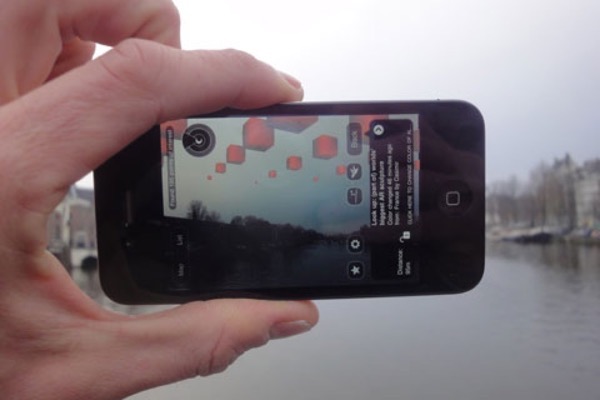
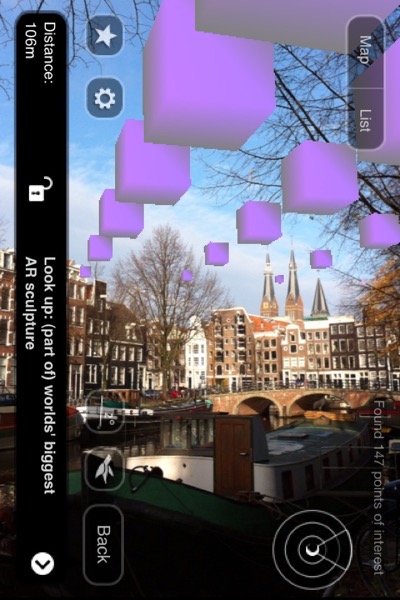
Augmented reality is a relatively recent technology that allows the user to see a computer-generated image, model, or video superimposed upon the real world. The augmented portion can be placed in context with the real world by “attaching” it to a specific location and elevation. The user would access this with a GPS enabled device. Another way of placing the augment is to attach it to a specific image. With this method, the device reads the image in the camera like a fingerprint, and then places the augment as specified. This method allows a designer to augment things like magazine pages, billboards, and other things that are geographically fluid.
A Manifesto from Manifest.AR
“All that is Visible must grow beyond itself and extend into the Realm of the Invisible” (Tron, 1982).
Augmented Reality (AR) creates Coexistent Spacial Realities, in which Anything is possible—Anywhere!
The AR Future is without boundaries between the Real and the Virtual. In the AR Future we become the Media. Freeing the Virtual from a Stagnant Screen we transform Data into physical, Real-Time Space.
The Safety Glass of the Display is shattered and the Physical and Virtual are united in a new In-Between Space. In this Space is where we choose to Create.
We are breaking down the mysterious Doors of the Impossible! Time and Space died yesterday. We already live in the Absolute, because we have created eternal, omnipresent Geolocative Presence.
In the 21st Century, Screens are no longer Borders. Cameras are no longer Memories. With AR the Virtual augments and enhances the Real, setting the Material World in a dialogue with Space and Time.
In the Age of the Instantaneous Virtual Collective, AR Activists aggravate and relieve the Surface Tension and Osmotic Pressure between the so-called Networked Virtual and the so-called Physical Real.
Now hordes of Networked AR Creatives deploy Viral Virtual Media to overlay, then overwhelm closed Social Systems lodged in Physical Hierarchies. They create subliminal, aesthetic and political AR Provocations, triggering Techno- Disturbances in a substratosphere of Online and Offline Experience.
Standing firmly in the Real, we expand the influence of the Virtual, integrating and mapping it onto the World around us. Objects, banal By-Products, Ghost Imagery and Radical Events will co-exist in our Private Homes and in our Public Spaces.
With AR we install, revise, permeate, simulate, expose, decorate, crack, infest and unmask Public Institutions, Identities and Objects previously held by Elite Purveyors of Public and Artistic Policy in the so-called Physical Real.
The mobile phone and future Visualization Devices are material witness to these Ephemeral Dimensional Objects, Post-Sculptural Events and Inventive Architectures. We invade Reality with our Viral Virtual Spirit.
AR is not an Avant-Garde Martial Plan of Displacement, it is an Additive Access Movement that Layers and Relates and Merges. It embraces all Modalities. Against the Spectacle, the Realized Augmented Culture introduces Total Participation.Augmented Reality is a new Form of Art, but it is Anti-Art. It is Primitive, which amplifies its Viral Potency. It is Bad Painting challenging the definition of Good Painting. It shows up in the Wrong Places. It Takes the Stage without permission. It is Relational Conceptual Art that Self-Actualizes.
AR Art is Anti-Gravity, it is Hidden and must be Found. It is Unstable and Inconstant. It is Being and Becoming, Real and Immaterial. It is There and can be Found —if you Seek It.
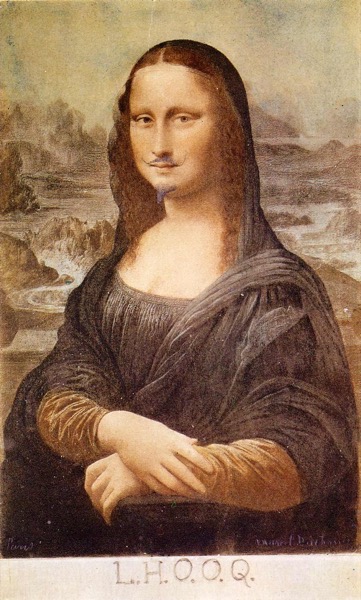
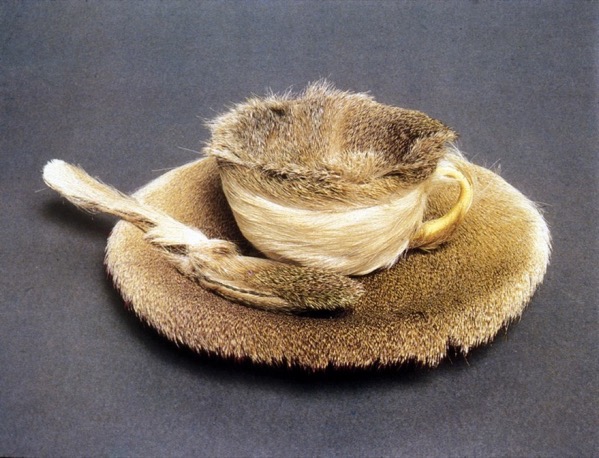
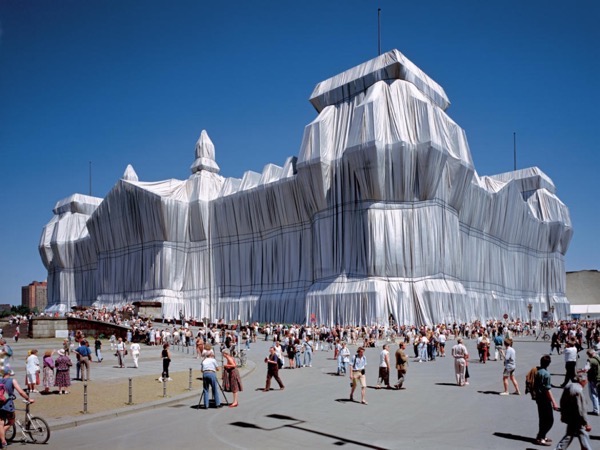
Placing one image next to or over another object will re-contextualize both, causing new meanings to emerge. Both together might evoke a response from the viewer that is 180 degrees different than either might cause alone. Augmented reality has the added property of being “already there,” waiting to be discovered.
In this project, you will augment a book selected from the library. The book cover will be the trigger image, and a time-based composition will be overlaid above the original cover. The exact nature and meaning of the image sequence will be left to you. Your sequence can describe a narrative, add small bits of imagery sequentially to the original, place images and videos contextually to build multiple meanings over time, or use any other conceptual approach.
Your goal in the assignment is to change the viewer’s relationship with the original book; to re-contextualize it, respond to it, or add to it through the augmented portion. You might achieve this by:
– Adding something to the original.
– Subtracting something from the original.
– Changing some property of the original.
– Overlaying a disparate object or image, one that contradicts the original.
– Revealing something hidden.
You can generate a new work from an existing book by finding an element in it to exploit. This element may be something conceptual, formal, related to its subject matter, or connected to your own relationship with the book. Examine the strategies used in the book—its imagery, design, subject, narrative, language, or context—and apply those to new material, or place them in a new context.
Think about the book as more than just a container for its content. A book can function as a map, a set of instructions, a record, an argument, a story, a system for organizing information, or even something that presents itself as authoritative or true. Consider what larger structures or ideas the book connects to, and let that influence how you build the augmented layer. If the book is about geography, for example, you might think about mapping, location, borders, or scale rather than simply illustrating something mentioned in the text. As you work, think about how the tools themselves, like layering, sequencing, movement, transparency, repetition, and compositing, can help construct meaning rather than just decorate the cover.
Think about the implications that the translation of media will have on the original. How does a static book cover change when translated into a time-based and interactive medium?
Requirements:
The chosen book cover must be sufficiently complex for the software to “fingerprint” it. No simple, minimal covers.
The overlays can be an combination of image, video, or animated gif. The final upload will be a movie file that will play as a loop, and the file size must be made as small as possible.
All content must be created by you, unless approved by the instructor.
We will be testing a new, bespoke platform. I will show you how to use it in class.
When creating your augments, naming is important- follow naming procedure:
Year_Semester_Lastname_Title
2018_Fall_Davis_Test
Here is an article you might read to further your understanding of AR.
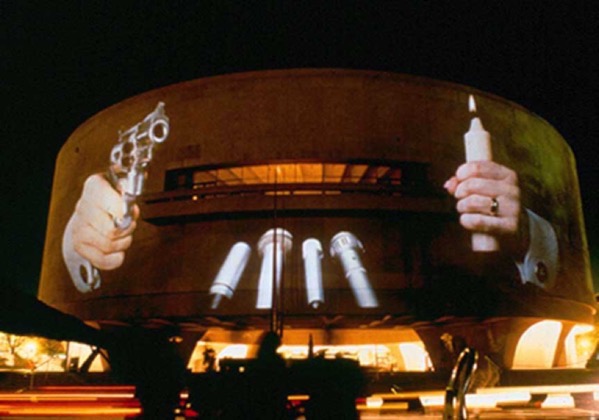
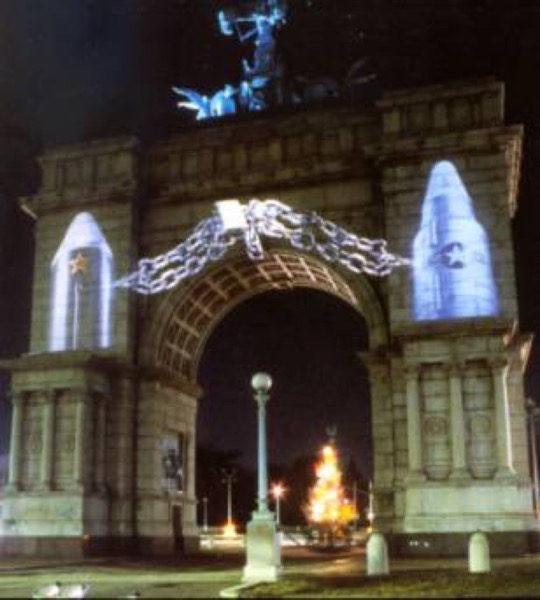
Some examples of augmentation and re-contextualization before the technology of augmented reality was available: